A Nationwide Project · Founding Chapter: Oklahoma

No Mass Surveillance of Ordinary People

"We the People are not a database."

Remove networked license plate reader cameras from public spaces. No government or vendor should hold a searchable history of where law-abiding people drive without individualized suspicion and constitutional process.

One Camera Reads a Plate. A Network Reads a Life.

Automated license plate readers (ALPRs), including systems sold by Flock Safety, photograph every passing vehicle and record its plate number, location, date, time, and often its make, color, and identifying details. They do this for every car, all day, whether or not anyone is suspected of anything.

One scan is a moment. A network is a dossier.

Aggregate (verb)
To collect many small pieces of information into one larger whole. Each ALPR scan is minor on its own. Aggregated, the scans become a searchable record of a person's movements over weeks, months, or years.

Aggregated plate scans can reveal where people work, where they worship, where they seek medical care, which political events they attend, where they assemble, whose homes they visit, and when and where they travel. That is not traffic data. That is a portrait of a private life, assembled without a warrant and searchable at will.

This campaign is not against solving crimes. Investigating a specific suspect with a specific court order is constitutional process. Recording the movements of an entire community is mass surveillance. For the full plain-language explainer of how these systems work, see ALPR 101.

The Fourth Amendment Was Written for This

The Fourth Amendment protects "the right of the people to be secure in their persons, houses, papers, and effects, against unreasonable searches and seizures." Its principle is simple: government surveillance of individuals requires individualized justification and lawful process, not blanket collection.

The Supreme Court has recognized, in a steady line of cases, that modern location and digital records deserve constitutional protection. In United States v. Jones (2012), long-term GPS monitoring of a vehicle raised Fourth Amendment concerns. In Riley v. California (2014), the Court held that digital information on a cellphone receives strong Fourth Amendment protection.

In Carpenter v. United States (2018), the Court held that when the government obtains historical cell-site location information revealing a person's movements over time, that is a search under the Fourth Amendment, generally requiring a warrant.

Most recently, in Chatrie v. United States (2026), the Supreme Court recognized that government acquisition of Google Location History data is likewise a search, extending the same principle: when technology assembles a detailed record of where a person has been, the Constitution is implicated. The Court did not decide that every geofence warrant is unconstitutional; it sent the question of that warrant's validity back to the lower courts.

An honest caveat: these cases do not automatically decide every ALPR program, and we never claim that every ALPR is already unconstitutional. What they show is that aggregated location surveillance raises grave Fourth Amendment concerns and demands strict constitutional scrutiny - and why communities should not wait for a courtroom to defend a principle they can defend at a city council meeting. Full case summaries: Court Cases.

Communities Across the Country Are Saying No

As of August 2026, communities in at least 23 states have rejected, canceled, non-renewed, or deactivated Flock camera programs in 2026 alone. Counts differ from source to source because those are distinct actions: some cities refused the cameras from the start, some ended contracts, some declined renewal, and some switched networks off.

Los Angeles, CA declined to renew its LAPD program after an audit found a 32.3 percent false-positive rate. Redmond, WA and Dayton, OH suspended and deactivated their networks. El Cerrito, CA; Ithaca, NY; Monroe County, IN; Harrisonburg, VA; Menominee, MI; Appleton, WI; and South Tucson, AZ canceled contracts or rejected the cameras outright.

The concerns these communities cited were not partisan. They cited privacy, data sharing beyond local control, federal access to local data, lack of transparency, accuracy problems, and erosion of public trust. Oklahoma communities can weigh the same evidence and reach the same conclusion.

Every entry above is verified and sourced in our Nationwide Tracker.

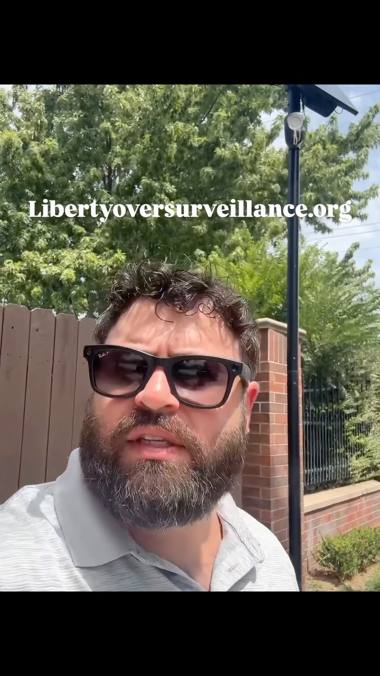
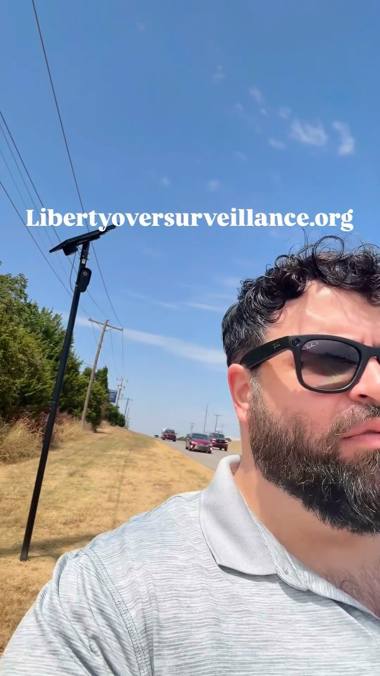
Allies in Oklahoma: DeFlockOKC organizes locally on this issue, and the Oklahoma legislature has pending interim studies on ALPRs. See the Oklahoma chapter page. Want to see the cameras near you? The volunteer-built DeFlock map shows documented ALPR locations nationwide - learn about the DeFlock movement.

The Position: Remove. Not Regulate Around the Edges.

We respectfully petition our state, county, and municipal governments as follows:

  1. Remove the cameras. Remove Flock and all networked ALPR surveillance systems from public spaces.
  2. No renewals, no expansion. Do not renew existing contracts or expand camera networks.

Interim safeguards - a fallback only, never the preferred solution

Until removal is complete, we ask that every jurisdiction adopt all six of the following. Safeguards do not make mass surveillance acceptable; they limit the damage while it is dismantled.

  1. Delete all non-hit data within 48 hours or less.
  2. No federal or out-of-jurisdiction data sharing without enforceable limits.
  3. No use for immigration enforcement, reproductive-health investigations, political activity, or protest monitoring.
  4. Publish every contract, policy, renewal agreement, sharing agreement, retention rule, camera location, funding source, and audit log.
  5. Open public hearings and meaningful public approval before any surveillance technology is purchased, renewed, or expanded.
  6. Independent audits, with real consequences for misuse.

OKC Just Renewed Its Flock Contract. Over Objections.

On August 18, 2026, the Oklahoma City Council voted 5-3 to renew its Flock camera contract - its third renewal since 2023. The renewal added first-time restrictions, including a narrow ban on federal data sharing, but the cameras stay up and the database keeps growing.

What that vote means

Restrictions were added because residents showed up and objected. That is proof the process responds to public pressure - and proof the pressure is not yet enough. A 5-3 vote is three council members already persuaded. Contact your officials and demand removal, full transparency, and public accountability, in writing.

Source: Free Press OKC, "City Council votes to renew contract for controversial Flock cameras". Full local detail: Oklahoma chapter page.

Contact Your Officials

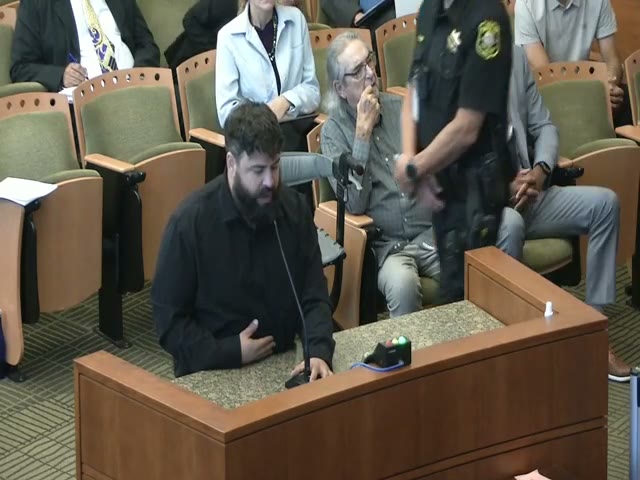
Surveillance contracts are approved locally, which means they can be ended locally. Call, write, and speak at public meetings. Be calm, factual, and persistent. Ask for the demands above, in writing.

In our founding chapter:

OKC Mayor's Office & City Council

Mayor's Office: (405) 297-2424
Contact Mayor Holt (web form)
City Council directory

OKC City Clerk

(405) 297-2391
[email protected]
200 N Walker Ave, OKC 73102
Handles open-records requests

Oklahoma County Sheriff

Sheriff Tommie Johnson III
(405) 713-1000
2101 NE 36th St, Oklahoma City, OK 73111

State Representative & Senator

House switchboard: (405) 521-2711
Senate switchboard: (405) 524-0126
Find My Legislature (oklegislature.gov)

Elsewhere? The same playbook works in every town: find who signs the contract in your town, and ask them the same questions. Then see State Chapters to organize where you live, and join us.

Emergency: 911. Use official agency channels for non-emergency matters.